
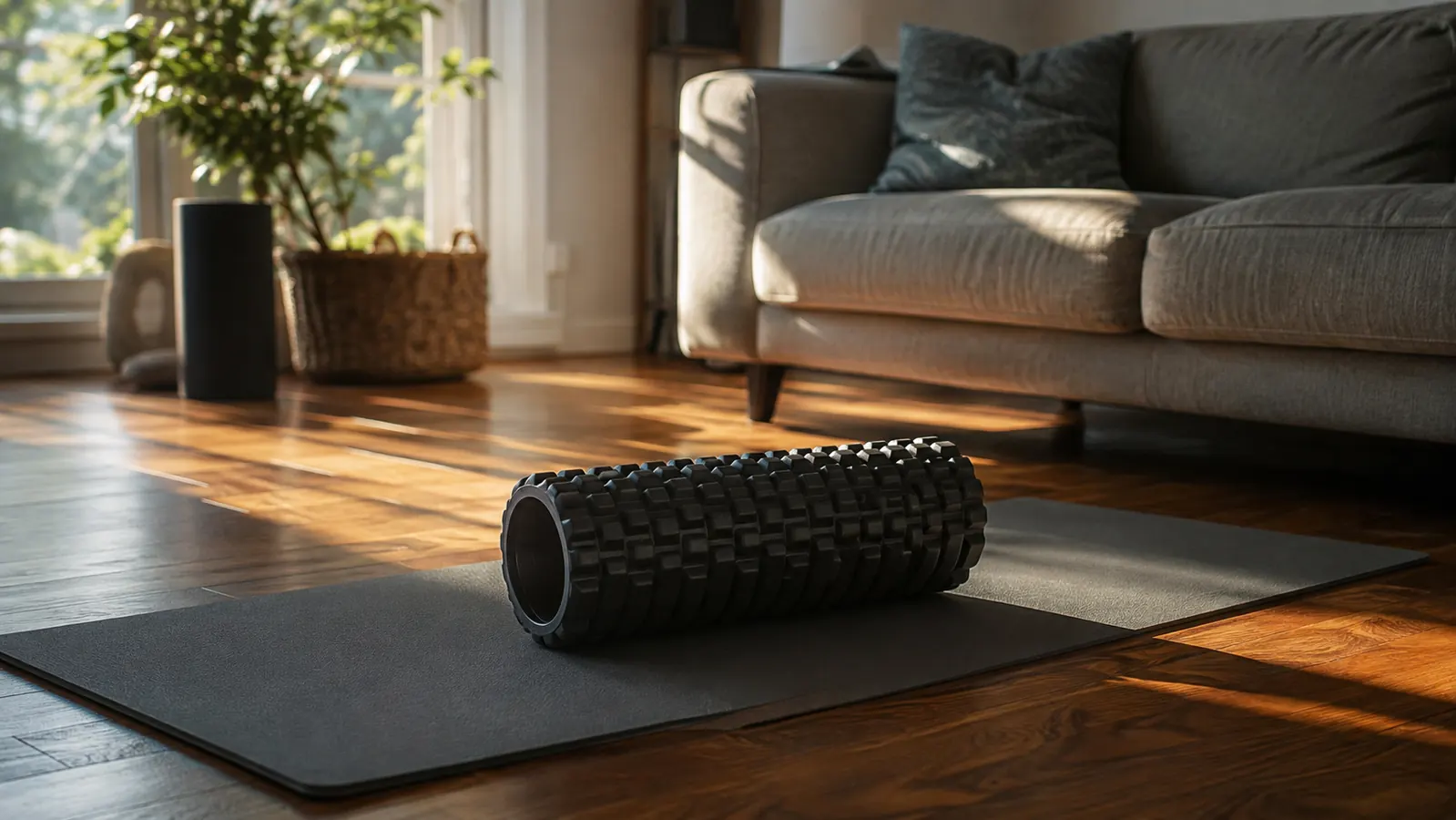
About six months ago I started waking up with a tightness in my lower back that would not go away. Not sharp pain, nothing dramatic, just that familiar stiffness that tells you your body is not recovering the way it used to. I was already exercising at home every day. I was doing bodyweight squats, pushups, resistance band rows. But the muscles would tighten up overnight and I would start the next day tighter than I finished the previous one.
I tried stretching more. I tried a cheap smooth foam roller from a sporting goods store. I tried a tennis ball wedged against the wall. None of it got deep enough into what was actually tight. The smooth roller was either too soft to reach the knot or too punishing on my spine. The tennis ball worked in one specific spot but was a hassle for any real area. I needed something that could apply deep pressure where I wanted it and back off where I did not. That is when I bought the TriggerPoint Grid.
The Quick Verdict
The TriggerPoint Grid delivers a deeper, more targeted muscle release than any smooth foam roller I have used. After six months of daily use it still feels as firm and effective as it did on day one. It costs more than a basic roller but it is built to last.
Amazon Check Today's Price →My pick for home muscle recovery after six months of daily use
If you need a foam roller that hits deep without punishing your spine and holds up to daily use, the TriggerPoint Grid is the one I reach for every time.
Amazon Check Today's Price on Amazon →How I've Used It
I use the TriggerPoint Grid twice a day most days. First thing in the morning I spend about five minutes rolling out my lower back, glutes, and hamstrings before I help my wife out of bed. Those are the muscles that take the most strain from the lifting and transferring that caregiving requires, and I have found that warming them up with the roller makes a real difference in how my body feels through the morning. Then in the evening after my workout I spend another five to ten minutes on my legs and upper back while watching something on TV with my wife. It has become part of the routine in a way that does not feel like an extra chore because I am already in the room anyway.
I have used the Grid on both hardwood floor and on the ProsourceFit mat I keep in the living room. It works well on both surfaces. On the hardwood it wants to slide a little during some exercises, so a mat or a rug helps keep it in place. But the Grid itself does not slip against skin or clothing. The textured surface provides good grip, which matters when you are putting real body weight into a quad or IT band roll and you do not want the roller to shift out from under you mid-movement.
I also use the Grid on my wife a couple times a week when her shoulders get tight from sitting in her chair all day. The 13-inch length is short enough to maneuver in tight spaces between furniture and on the bed for lighter pressure when she does not want full body weight on a spot. A longer roller would be harder to store in our small setup and harder to handle one-handed when I am working on someone else. The Grid tucks behind the leg of the couch and nobody knows it is there until one of us needs it.
A typical weekday routine for me goes like this. Morning roll before my wife wakes up: lower back for about two minutes on each side, glutes for a minute each, hamstrings for a minute each. Evening roll after my resistance band workout: quads for two minutes per leg, IT bands for one minute per side, upper back for about three minutes total. Some days I skip the evening roll if I feel fine. Most days I do not because that ten minutes is what keeps me from waking up stiff the next morning.
What the Multi-Density Grid Actually Does
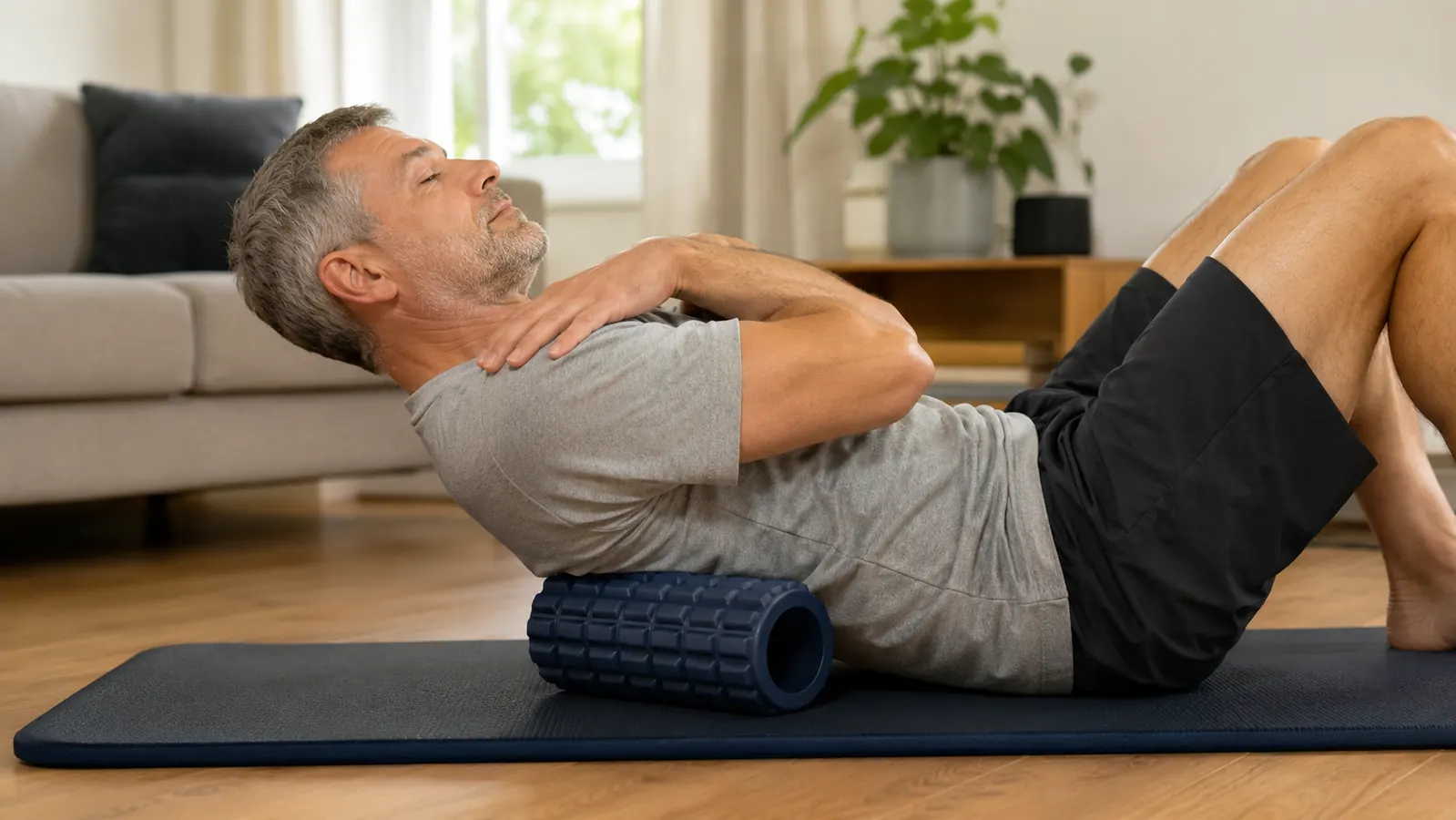
The Grid has a surface pattern that goes beyond a uniform foam cylinder. The roller has three zones working together: a dense outer ring, a medium-density center, and open channels between them. The dense areas press into muscle tissue the way a therapist's thumb or elbow might. The channels create space that relieves pressure on bony spots like the spine, the back of the knee, and the shin. The result is a roller that applies deep pressure exactly where you want it and backs off where you do not.
This is the key difference between the Grid and the cheap smooth roller I owned before. A smooth roller applies uniform pressure everywhere, so it either does not hit deep enough in the meaty areas like the quads and glutes, or it is too aggressive on the bones and joints. The Grid pattern lets me work a knot in my upper back with real force and then roll over a vertebra without wincing. That sounds like a small thing until you have tried both and felt how much easier it is to actually use the Grid consistently instead of avoiding the painful spots.
I was skeptical at first about whether the pattern was a real innovation or just marketing. But after six months I am convinced the multi-density design is what makes the product worth its price. The channels are not cosmetic. They change how the roller behaves on different parts of the body. On the quads, the dense rings dig into the muscle and release tension that a smooth roller cannot reach. On the upper back, the channels let you position the roller so the dense parts hit the muscle alongside the spine while the channel floats over the vertebrae themselves. That translates directly into a better experience and better recovery.
Durability After Months of Daily Use
After six months of use the Grid looks almost new. The outer surface has a few light scuff marks from being dragged across the floor, and the textured pattern has picked up a bit of dust in the channels, but the foam itself has not softened, developed any flat spots, or started peeling. I was concerned about the pattern breaking down over time because those channels and ridges seemed like places where a cheaper foam roller would wear unevenly or collapse. But the material has held its shape completely.
One thing I did notice is that the Grid collects dust and pet hair more than a smooth roller. The textured surface has more nooks to catch things. A couple times a month I wipe it down with a damp cloth and that takes about thirty seconds. It is a minor maintenance task but worth knowing about if the idea of cleaning a textured foam roller sounds like a hassle to you. It does not affect performance at all, but it is something I do that I never had to do with the smooth roller.
I have not had any issue with the Grid absorbing sweat or developing an odor. That was a problem with my previous smooth foam roller, which started to smell after a few months of use because the open-cell foam would soak up moisture during summer workouts and never fully dry out. The Grid material appears to be a closed-cell foam that does not absorb moisture. After six months of twice-daily use it still has no smell at all. That might be the most surprising thing about the durability given that I live in a humid climate and sweat plenty during my workouts.
What I Liked
- Multi-density grid pattern delivers deep tissue release without punishing bony areas
- Durable construction that has not softened, dented, or peeled after six months of daily use
- Compact 13-inch length stores easily in tight home spaces behind furniture or under couches
- Does not absorb sweat or develop odors over time unlike cheaper foam rollers
- Textured surface provides good grip against skin and clothing during use
- Works well on both hardwood and mat surfaces without slipping
Where It Falls Short
- Priced higher than basic smooth foam rollers at today's price
- Grid pattern can leave temporary marks on skin after heavy use
- Textured surface collects dust and pet hair more than a smooth roller does
- May be too firm and intense for beginners or people with very sensitive muscles
- 13-inch length limits some exercises that require a longer roller for full-body support
After six months of twice-daily use, the foam itself has not softened, developed flat spots, or started peeling. It still feels as firm as it did on day one.
What It Does for Recovery and What It Does Not
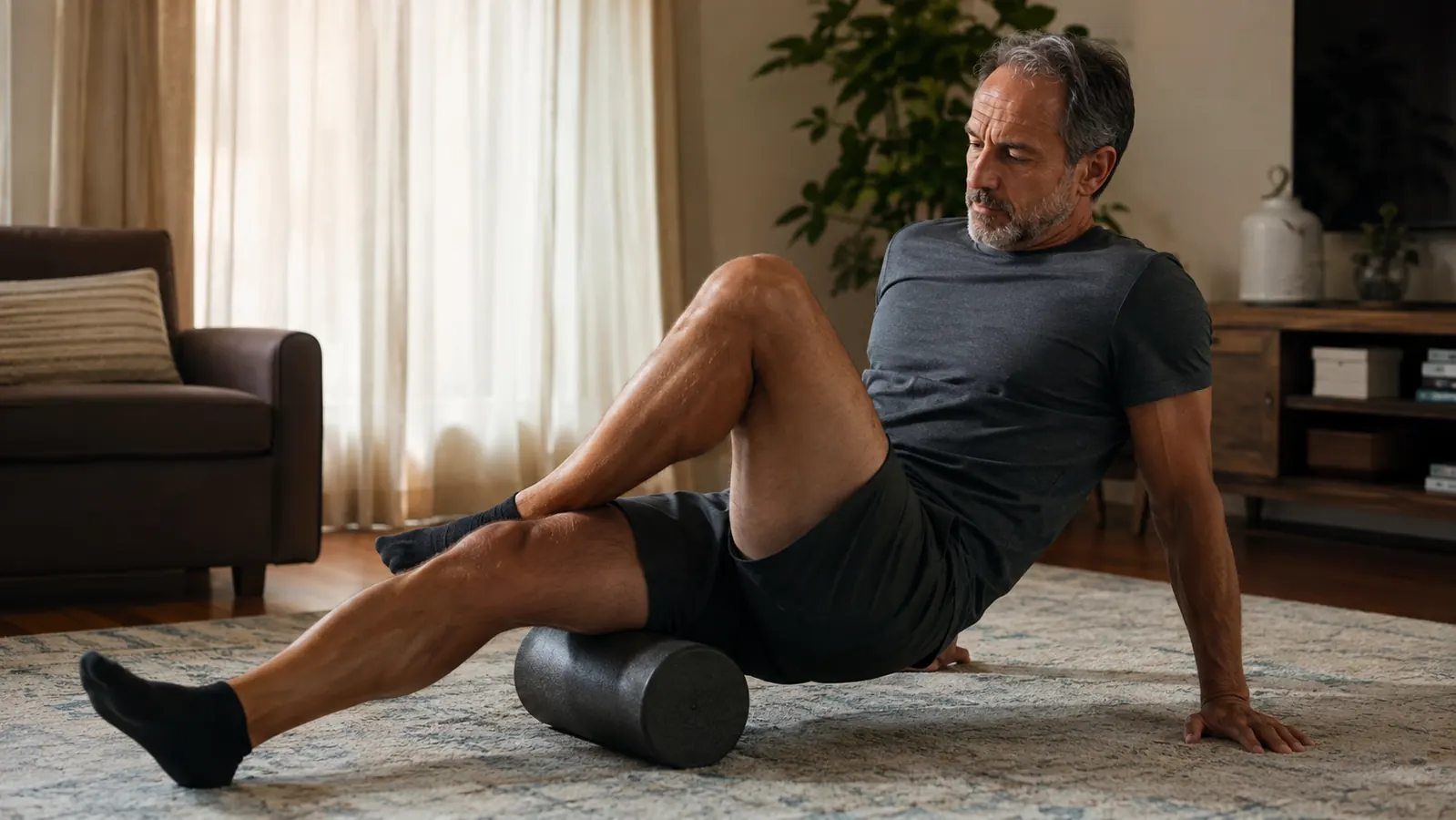
The Grid is excellent at releasing muscle tension after a workout. I use it most on my quads, hamstrings, glutes, and upper back, and in all of those areas it delivers a deeper release than any smooth roller I have used. The difference is most noticeable on the upper back and shoulders, where the dense ridges can really dig into the knots that form from hunching over a desk or from the awkward lifting that caregiving sometimes requires. After a hard session of resistance band rows and pushups, ten minutes on the Grid makes the difference between waking up sore the next morning and waking up ready to move through the day.
The Grid is also useful for maintaining mobility day to day. Even on rest days I find myself spending five minutes on it just to keep the muscles from tightening up. The sensation is different from stretching. Stretching pulls muscles apart at their ends. Foam rolling presses into the muscle belly and releases the knots and trigger points that limit your range of motion. They are complementary, not the same thing. I do both and I notice when I skip either one for a few days in a row.
That said, the Grid cannot do everything. It is not a replacement for stretching, for professional massage therapy, or for a proper warmup before exercise. It is a tool for releasing tension after the fact, and it does that one job well. I have also found that it is less useful on the neck and on the calves than I hoped. The 13-inch length makes it awkward for targeting the calves with full body weight because your foot tends to hang off the end. And the grid pattern is too aggressive for the neck, where I prefer a softer, smoother roller or just using my hands. Understanding these limitations matters because it helps you decide if the Grid is the right tool for the kind of recovery you actually need.
How It Compares to Other Recovery Options
Before the Grid, I used a smooth foam roller that was cheap. It served its purpose for about six months before it softened to the point where it barely did anything. It was fine for a beginner but after a while I needed more depth. The TriggerPoint Grid costs more but it delivers more and it lasts longer. If you are on a tight budget and not sure whether foam rolling is for you, start with a cheap roller and see if you stick with it. If you already know you need deep release and want a product that will not wear out in a few months, the Grid is worth the jump.
I also considered a massage gun before buying the Grid. A lot of people in online forums swear by them for deep tissue relief. But the price difference is significant. A decent massage gun costs three to five times what the Grid costs, and from what I have read the cheaper ones tend to break within a year. The Grid has no batteries, no moving parts, no charging, and nothing to break. It is a hunk of molded foam that just works. I wrote a full comparison of foam rollers versus massage guns that covers the tradeoffs in more detail if you are trying to decide between them.
Who This Is For
The TriggerPoint Grid is for anyone who exercises at home and wants real recovery without spending on massage guns or regular therapy visits. It is especially good for people who sit at a desk during the day and feel that tightness building in the upper back and hips. The grid pattern is designed to release exactly the kind of tension that builds up from sedentary work, and it does it better than a basic roller because it can reach deeper into the muscle without being painful on the spine.
It is also for caretakers, parents, and anyone whose daily life involves physical work at home that leaves muscles tight and sore. If you are lifting, carrying, or supporting another person on a regular basis, your lower back and shoulders are taking more abuse than the average person's. The Grid gives you a way to release that tension at home without adding another appointment or expense to your week. For me, that has been the difference between chronic low-level tightness that I just lived with and actually feeling loose enough to keep going day after day.
Who Should Skip It
Skip the Grid if you are brand new to foam rolling and have very sore or sensitive muscles. The firm density and the grid pattern can be intense, especially on the first few uses. I have seen people try a friend's Grid for the first time and almost jump off it because the pressure was too much. Start with a smooth, softer foam roller to get used to the sensation of myofascial release. Build up some tolerance for a few months first, then consider upgrading to the Grid when you feel like your smooth roller is not getting deep enough anymore.
Also skip it if you need a full-length foam roller for stability during exercises that require both ends to stay grounded. The 13-inch length is great for portability and storage but it does not provide the stability of a longer 18-inch or 26-inch roller for things like lying on your back and rolling out your entire spine with both ends of the roller on the floor. If your primary use case is full-body support during mobility drills or if you are a taller person who needs more surface area, a longer roller might serve you better.
Try the TriggerPoint Grid for yourself after what I learned in six months
If you are looking for a foam roller that delivers deep recovery and will outlast the cheap alternatives, the Grid is worth every penny. It has earned a permanent spot in my home setup.
Amazon Check Today's Price on Amazon →