
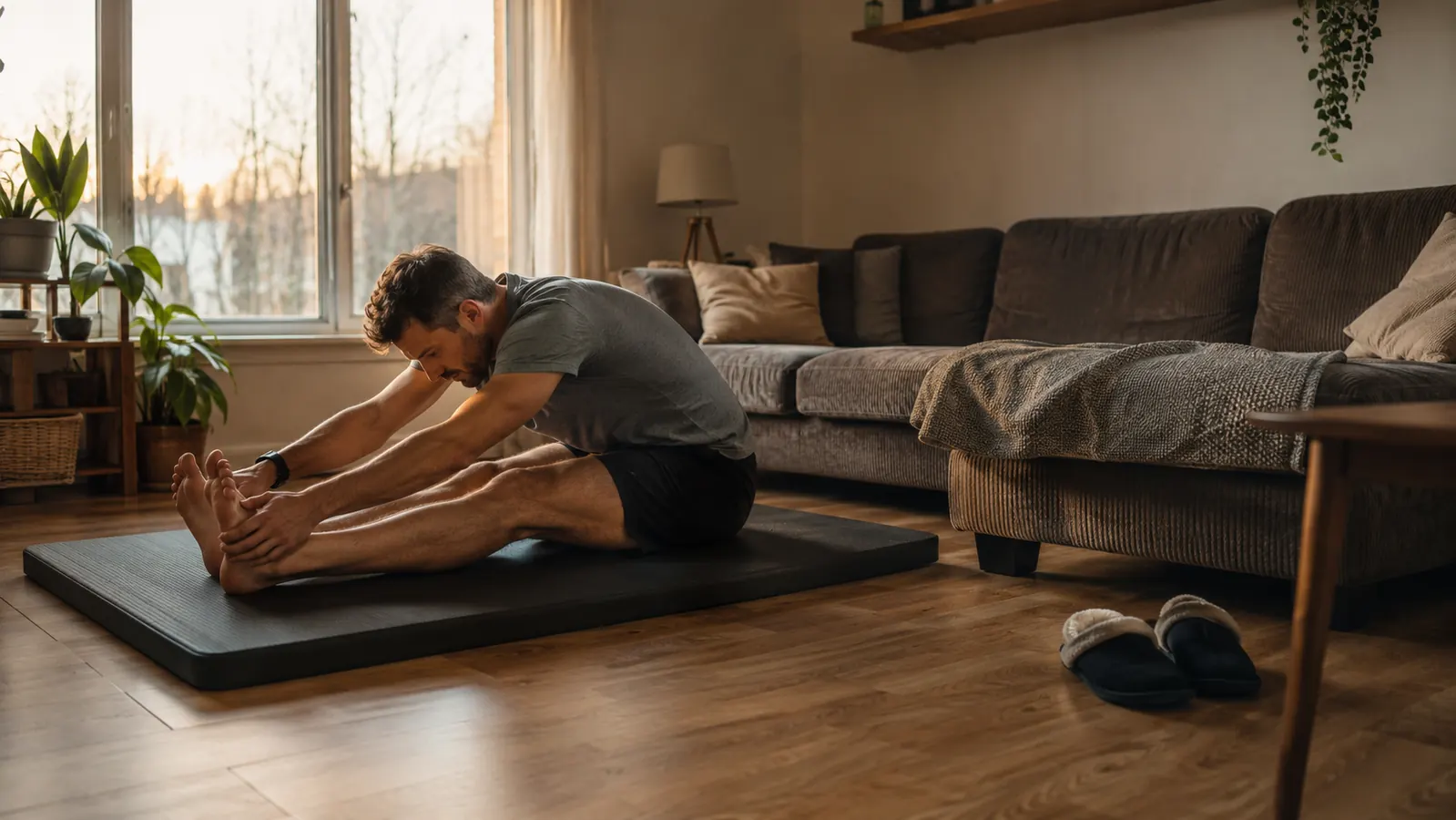
The product listing makes it sound simple: extra thick foam, joint relief, comfortable floor workouts. And that is not wrong. The ProsourceFit Extra Thick Yoga and Pilates Mat really does cushion your knees and wrists on hard floors. But after five months of using the half-inch version every single day, I have found a handful of things the listing leaves out. Some of them matter a lot depending on what kind of exercises you do and where you do them.
I am not here to tell you the mat is bad. It is not. It is a solid product at a fair price. But I have read too many reviews that make every product sound perfect, and the ProsourceFit mat has real tradeoffs. If you are trying to decide whether this is the right mat for your home setup, here is what I wish someone had told me before I bought mine.
The Quick Verdict
The ProsourceFit mat delivers genuine joint relief for floor work at a fair price, but the soft foam that makes it comfortable also reduces stability for standing exercises. The 1/2-inch version is a strong value for bodyweight floor routines if you understand the tradeoffs before you buy.
Amazon Check Today's Price →If your joints ache after floor workouts, this is the one thing that actually helps.
The ProsourceFit mat is the most affordable way I have found to turn a hard floor into something you can exercise on every day. Check the current price on Amazon to see if it fits your budget.
Amazon Check Today's Price on Amazon > →How I Have Used This Mat
I bought the half-inch version, not the one-inch. The thicker version seemed like overkill for my mix of exercises, and I wanted to test whether the standard thickness was enough to make a real difference. My exercise corner is in the living room on laminate flooring. I do bodyweight circuits, core work, mobility drills, and some light yoga flows. My wife Mildred uses it too on days when she feels up to doing seated stretches.
Most sessions run twenty to thirty minutes. I weigh about 185 pounds and I use the mat five or six days a week. That is enough time for any mat to show its real personality. After five months I can tell you exactly what works, what does not, and what surprised me.
One thing worth noting: the mat stays on the floor most of the time. I tuck it under the edge of the couch during the day so it is out of Mildred's path with her walker. That means it gets sunlight exposure and foot traffic, which is a tougher test than a mat that lives in a closet and only comes out for workouts.
The First Thing You Notice: That Foam Is Soft
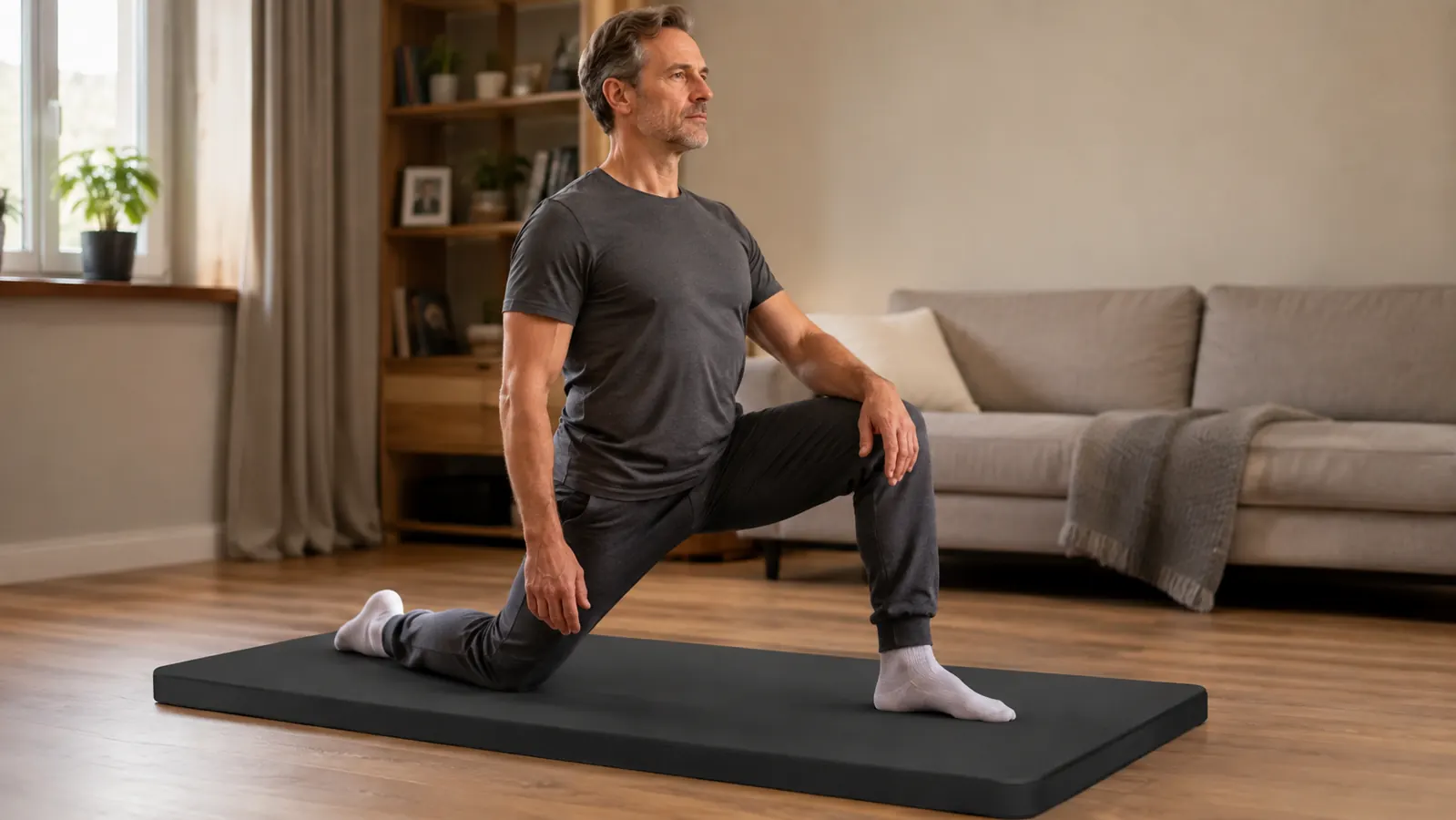
The ProsourceFit mat uses a closed-cell foam that is noticeably softer than the dense rubber mats you see in commercial gyms. That softness is what makes it comfortable for floor work. When I drop into a kneeling position, my knees do not feel the floor at all. When I do prone cobra stretches, my hips sink into the foam instead of resting on a hard surface. For anyone with joint sensitivity or older knees, that immediate comfort is the whole reason to buy this mat.
But here is what nobody tells you. The same softness that feels great on your knees works against you when you need stability. Standing balance poses like tree pose or warrior III feel noticeably less steady on this mat than on a thin surface. The foam compresses unevenly under your feet, and your body makes tiny corrections to stay upright that you would not need on a firmer surface. I noticed this within the first week. It is not dangerous, but it is real.
If your routine is mostly floor-based, you will not care about this tradeoff. If you do a lot of standing yoga or single-leg balance work, the soft foam will frustrate you every session. That is the honest version.
What Nobody Tells You About Rolling It Up
The product photos show a neat rolled mat with a strap. What they do not show is how much effort it takes to get a tight roll. The half-inch foam is pliable enough that getting a clean roll requires kneeling on the mat, applying pressure along the entire length, and cinching the strap while holding tension. It takes about two minutes. I do it every day. It has not gotten faster with practice.
The included carrying strap works but it is basic. The buckle is plastic. The strap holds the rolled mat together but it does not have a handle or padding, so carrying it slung over your shoulder is fine for short distances but gets uncomfortable if you are walking more than a few minutes. I carry mine from the living room to the back patio maybe once a week. For that distance it is fine. I would not want to carry it six blocks to a park.
The mat weighs more than you expect from looking at it. The half-inch is lighter than the one-inch version obviously, but it is still heavier than a standard yoga mat by a noticeable margin. That weight comes from the density of the foam and it is a good thing for durability. But if you are buying this thinking it will be as easy to haul around as a cheap yoga mat, adjust your expectations.
The Floor Grip Question Has a Complicated Answer
ProsourceFit says the mat works on most surfaces, and that is true in the sense that it will sit on most surfaces. But how well it stays put varies a lot. On my laminate floor the mat stays planted during floor work. I can do plank shoulder taps, mountain climbers, and hip thrusts without the mat shifting. But standing exercises are a different story. During sun salutations I need to reset the mat position once or twice per session. It drifts maybe an inch or two.
I talked to a neighbor who has the same mat on wall-to-wall carpet, and he says it does not move at all during any exercise. He does standing flows regularly and has never had to adjust it. On tile, which I tested at a friend's house, the mat slides more than on laminate. Enough that I would not want to use it for anything dynamic on tile.
The bottom texture is a raised grip pattern that handles hard floors reasonably well. The top surface has a smooth finish that provides moderate traction. I have never slipped out of a down dog or a lunge, but I have noticed that when my hands get damp during longer sessions the grip decreases noticeably. If you sweat heavily, keep a towel nearby.
The Surface Attracts Everything
This is a small thing that becomes a daily thing. The closed-cell foam has a texture that generates static electricity against laminate flooring, and that static pulls in every speck of dust, every dog hair, every bit of lint within reach. I wipe the mat down before every session. If I skip that wipe-down, I end up with a collection of household debris stuck to the surface that I have to brush off mid-workout.
Cleaning is easy. A damp cloth takes everything off in about thirty seconds. But it is something you have to do, and the product listing does not mention it. The one-inch version probably has the same issue since it is the same material. If you have pets, expect to clean the mat before every use.
The Half-Inch vs One-Inch Decision Is the Real Fork
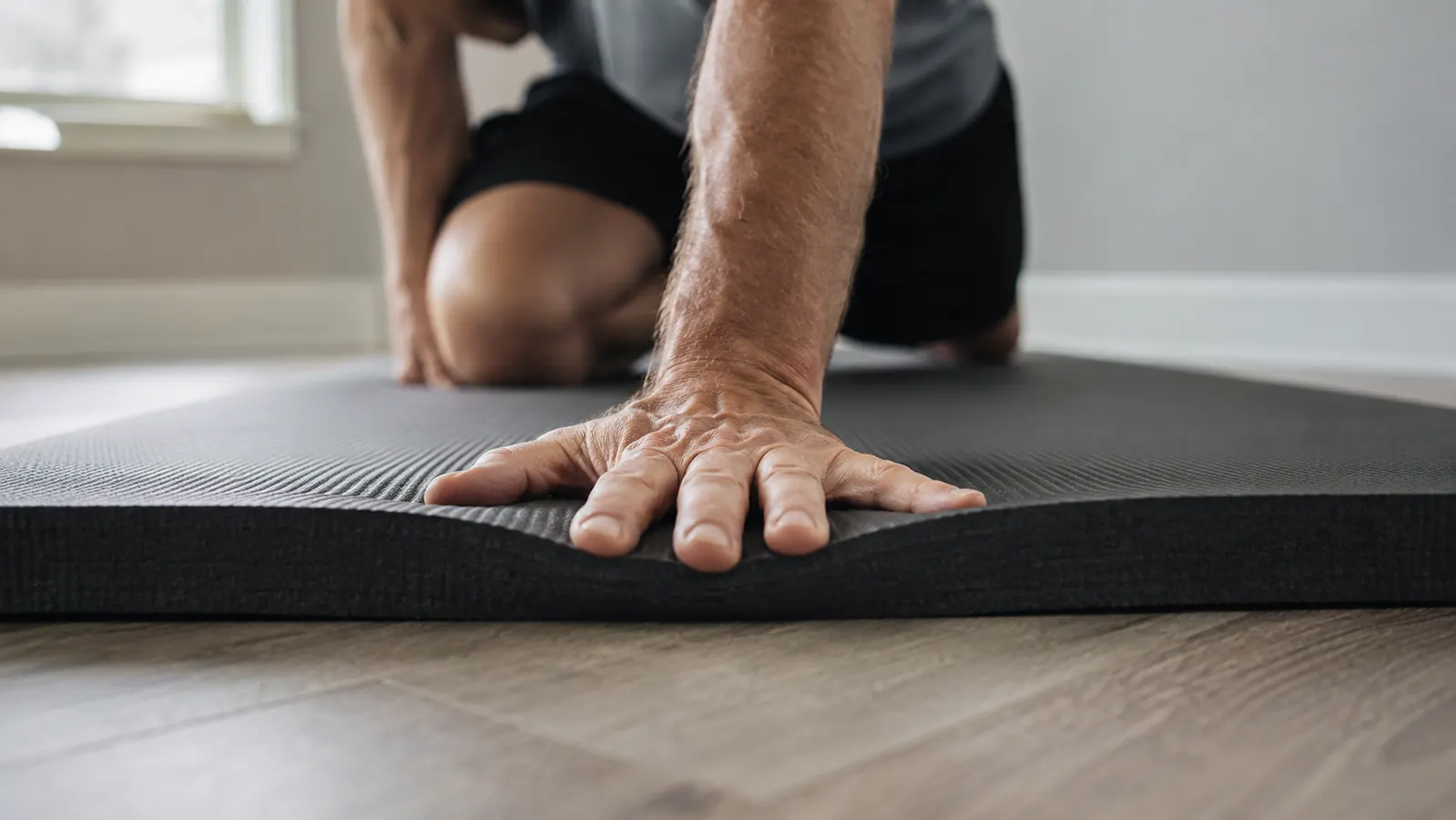
I went with the half-inch version because I wanted to see if it was thick enough to make a difference without the extra weight and stability loss of the one-inch. The answer is yes and no. For floor work like glute bridges, clamshells, lying leg raises, and core work, the half-inch is more than enough. My hips and tailbone feel fine after twenty minutes on the floor.
But for anyone who does a lot of kneeling work, the one-inch version might be the better call. During deep hip flexor stretches and kneeling lunges, I can feel the floor through the half-inch mat. It is not painful, but I am aware that I am on a padded surface over a hard floor rather than on a truly cushioned surface. If your routine is mostly kneeling or lying work, the one-inch version will serve you better.
The one-inch is heavier and harder to roll. The half-inch is more portable and gives you better feedback from the floor. Your exercise mix should decide, not the price difference. The price gap between the two is small enough that cost is not a real factor.
Durability So Far: Mixed Signals
After five months of daily use, the mat is holding up well in most ways. The foam has not lost its bounce. The edges have not curled. The surface has not peeled or flaked. Those are all good signs, and they suggest the mat will last a couple of years at least with daily use.
But there are two things worth noting. The first is that the foam takes compression marks from anything you leave on it. I set a laptop on the mat for maybe ten minutes one afternoon, and the indentation was visible for the rest of the day. The mat bounces back eventually, but it is not a surface you want to store things on, even briefly.
The second is that the mat holds onto body oils where my elbows and knees make contact during floor exercises. There are faint marks forming in those spots. A wipe with a damp cloth removes them, but if I skip cleaning for a few days they stay visible until the next cleaning. I did not expect that from a closed-cell foam mat. It is not a dealbreaker, but it is one more thing to stay on top of.
What I Liked
- Genuine joint relief for knees, wrists, hips, and tailbone during floor exercises on hard surfaces
- Closed-cell foam resists moisture and odors better than natural materials
- Fair price compared to other thick mats on the market
- 71-inch length works for most users including taller frames
- Included carrying strap makes moving between rooms feasible
Where It Falls Short
- Soft foam reduces stability for standing balance poses and single-leg work
- Rolling the mat up tightly enough for the strap takes effort every time
- Surface texture attracts dust, lint, and pet hair due to static buildup
- Mat shifts on tile floors during standing exercises and needs resetting
- Foam takes visible compression marks from anything left on it, even briefly
- Body oils leave faint marks where elbows and knees make repeated contact
After five months, the foam still bounces back and the edges have not curled. But I have to wipe it down before every session because the static pulls in every dog hair within reach, and the soft foam that saves my knees also makes standing balance poses feel mushy. That trade is the honest review.
Who This Is For
This mat is for you if your at-home exercise routine is built around floor work and your joints are telling you the current setup is not cutting it. If you do bodyweight circuits, core exercises, Pilates, stretching, mobility work, or gentle yoga on a hard floor, the ProsourceFit mat will make a noticeable difference in how your body feels during and after exercise. It is especially good for anyone over forty, anyone with existing joint sensitivity, and anyone exercising in a living room or bedroom where the floor is laminate, hardwood, or tile.
It is also for people who want an affordable upgrade without committing to a premium mat. The ProsourceFit costs less than half of what some premium mats run, and for floor-based routines it delivers 80 to 90 percent of the same comfort. That is a trade worth making for most home exercisers.
I would add one more group: people like me who spend a lot of time on the floor for reasons that have nothing to do with a workout program. Between stretching while my wife rests, doing planks between online work tasks, and sitting on the floor to sort through a drawer, that soft foam is under me far more than a gym mat would be. In a small house where the floor does double duty as a living space and a workout space, the mat earns its place every single day.
The last group is anyone nursing a sore knee or wrist who wants to keep moving without making things worse. I am not a doctor, but I can say from my own experience that switching from a hard floor to this mat took the sharp edge off my joints within the first week. It did not cure anything. It just made daily movement feel less like a punishment.
Who Should Skip It
Skip this mat if your primary exercise is standing yoga where you need a firm, stable connection to the floor for balance and transitions. The soft foam will fight you on every standing pose, and you will be happier with a thinner, denser mat. Skip it also if you need to pack your mat into a bag and take it to a studio or park. The ProsourceFit does not fold, it is heavier than standard mats, and the carrying strap is fine for home use but not built for daily commuting.
If you exercise on carpet already, the extra thickness is less useful because the carpet provides some cushioning on its own. A thinner mat would serve you fine and be easier to store. And if you are the kind of person who does not want to wipe down their mat before every workout, the dust-and-fur situation on this mat will annoy you more than it should.
The honest bottom line: this mat is a great value if you know what you are signing up for.
The ProsourceFit mat solves the joint pain problem for floor workouts at a price that is hard to argue with. If your routine matches what this mat does best, check the current price on Amazon and see if it fits your setup.
Amazon Check Today's Price on Amazon > →