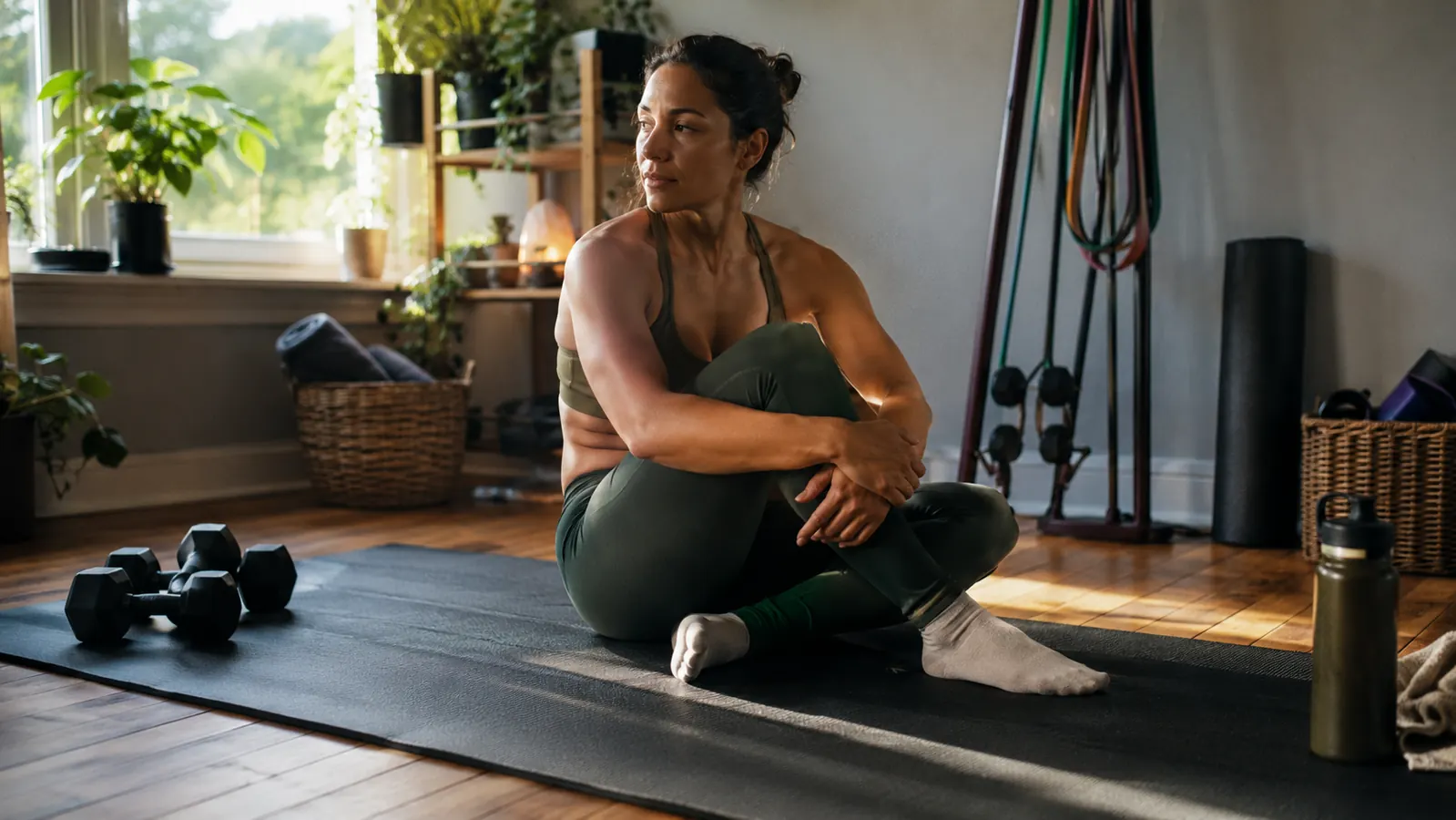
I remember the exact moment I realized I had been doing floor exercises wrong for years. I was on my hands and knees doing bird dogs in the living room, and my left knee sent a sharp message straight to my brain. Not a stretch sensation, not muscle fatigue. A real ache that stayed tender for the rest of the afternoon. I had been using a thin yoga mat I bought at a big box store, thinking any mat was good enough for home workouts. I was wrong. The fix that finally worked was a ProsourceFit Extra Thick Mat.
I am Ernie. I exercise at home every single day between caring for my wife and the online work I do from the house. Floor work -- planks, bird dogs, glute bridges, core circuits, stretching -- makes up a big part of my routine. And for a long time, I was making a mistake that made my knees, wrists, and lower back pay the price. If you exercise on hard floors at home and your joints are telling you something is off, this guide is for you. I put together five steps that changed how my body feels after a workout.
The mat that fixed my joint pain during floor workouts
After trying four different mats, the ProsourceFit Extra Thick Mat is the one that finally let me do floor work without wincing. A full inch of high density foam that actually absorbs impact instead of letting it go straight to your joints.
Amazon Check Today's Price on Amazon →Step 1: Match Your Mat Thickness to Your Floor Surface
The first mistake I made was thinking one thickness fits all. I was using a 3mm yoga mat on a hardwood floor over a concrete slab. That is roughly the same as doing floor exercises on a bath towel. Every pushup sent shock through my wrists. Every kneeling position drove pressure into my kneecaps. It took me weeks to figure out that the floor, not my form, was the problem.
Here is the rule of thumb I landed on. If you exercise on carpet, a 6mm to 8mm mat is usually enough because the carpet provides some give underneath. But if you are on hardwood, tile, or laminate -- which is most home setups -- you need at least 12mm to 13mm of cushion. The ProsourceFit Extra Thick Mat comes in a half inch version and a full one inch version. I use the one inch on my hardwood floor and the difference compared to my old mat is night and day. My knees no longer tell me they exist after a 20 minute core session.
The science behind it is simple. Hard surfaces create pressure points where your bones contact the floor through your skin and muscle. A mat that is too thin does not distribute that pressure, so your joints absorb the impact directly. A mat with enough thickness spreads your body weight over a larger surface area, reducing the peak pressure on any single joint. For me, that one inch of high density foam was the threshold where the pain stopped.
Step 2: Use the Full Mat Length for Spinal Alignment
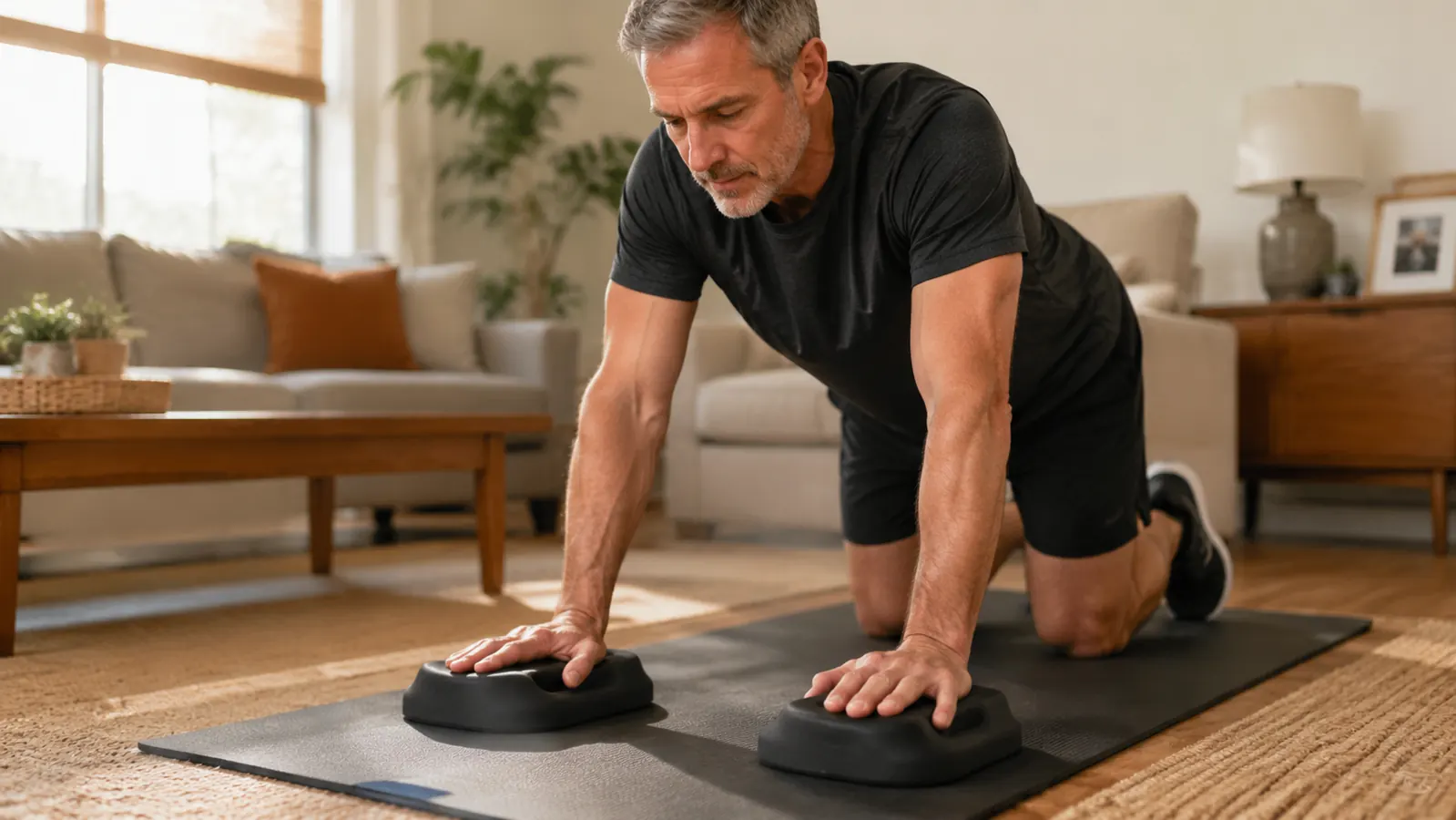
This one sounds obvious but I ignored it for months. When I did lying exercises like glute bridges, dead bugs, or leg raises, I would position myself so my head was on the mat but my lower back and hips were half off it. That put my spine in a slight twist every single rep. Not enough to feel during the exercise, but enough to leave my lower back tight and cranky by the end of the week.
The ProsourceFit mat is 71 inches long, which is longer than most mats I looked at. At five foot ten, I can lie fully stretched out with my head on one end and my heels at the other. That matters because your spine needs to stay in a neutral position during floor work. When part of your body is off the mat, even by an inch or two, your pelvis rotates slightly to compensate. Over hundreds of reps across weeks, that small compensation adds up to real discomfort.
Here is what I do now. Before every floor session, I position the mat so I have room to lie down and stretch my arms overhead without any part of my body touching the bare floor. I check that my head, shoulders, hips, and heels all land on the mat. That simple setup step takes ten seconds and has done more for my lower back than any stretching routine I have tried.
Step 3: Create Dedicated Knee Zones for Kneeling Exercises
Kneeling exercises were the hardest for me to keep in my routine because my knees punished me every time. Bird dogs, hip flexor stretches, quadruped shoulder taps, cat cows -- all of them involve pressing your kneecaps into the floor. On a thin mat, I could feel the hardness through my patella within two minutes. I started avoiding kneeling movements altogether, which meant my core and hip routines became incomplete.
The fix was not just a thicker mat, though that helped tremendously. It was also about where I placed my knees on the mat. The ProsourceFit mat uses high density foam that does not compress completely flat under pressure. When I kneel on it, I can feel the foam supporting my kneecaps rather than giving way until my bone hits the floor. That support has been the difference between doing kneeling exercises for five reps and doing them for the full set.
A trick I picked up along the way: if specific knee tenderness is still an issue even on a thick mat, fold a hand towel into a small pad and place it under your knees on top of the mat. That extra localized cushion gives you a double layer where you need it most. I used this for the first two weeks of transitioning to my new mat, and after that my knees had adjusted enough that I no longer needed the towel.
Step 4: Protect Your Wrists with Proper Hand Positioning
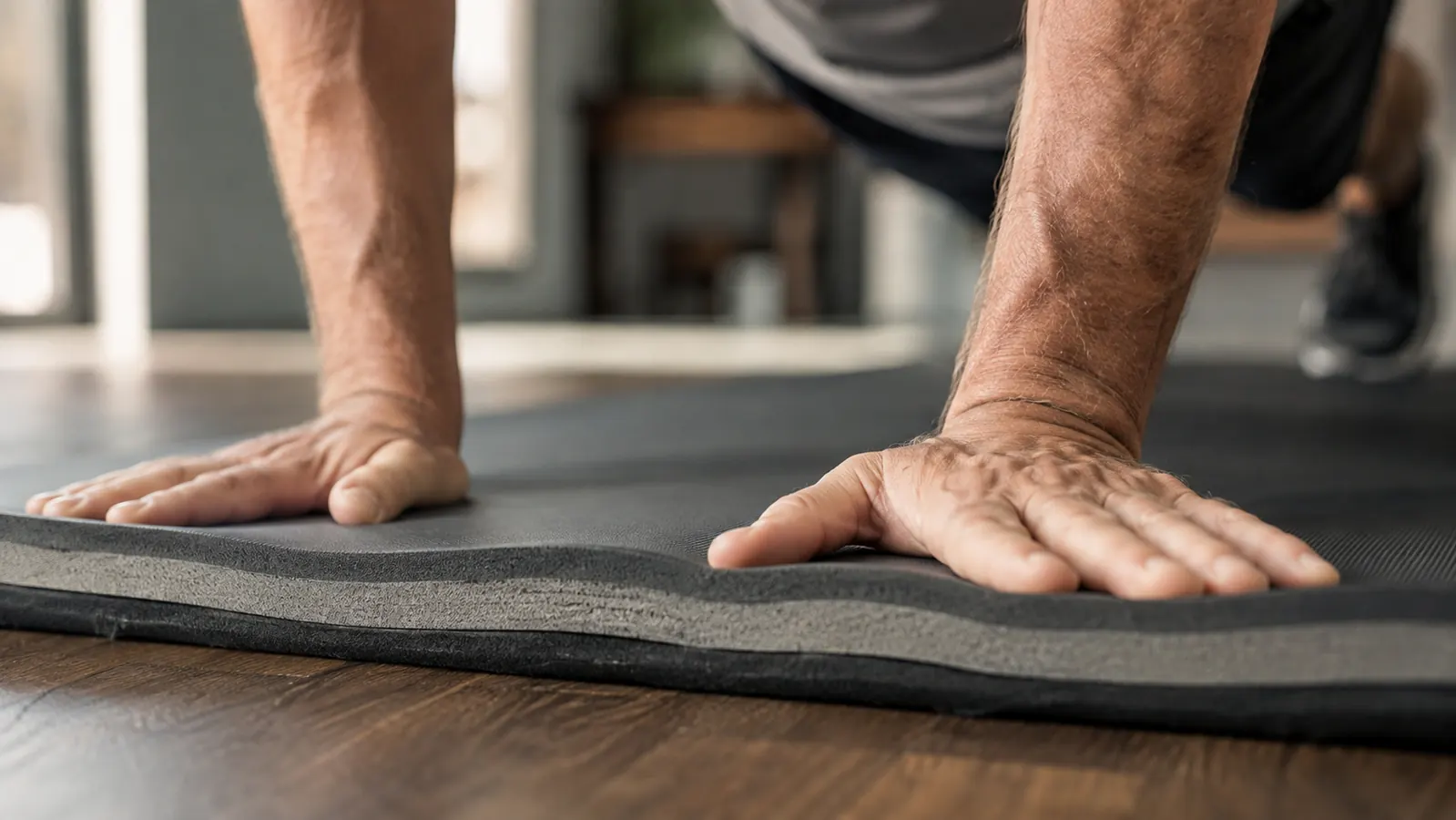
Wrist pain was actually my first warning sign, before the knee issues started. When I did planks, pushups, and downward dog, I would feel a sharp strain in the base of my palms. I assumed it was a strength issue, that my wrists just needed to get stronger. But the pain never faded. It got worse. And it turned out the real problem was that my thin mat let my hands sink unevenly into the floor, putting my wrists at a bad angle.
A mat that is too thin or too soft creates instability. When you press into it, your hand sinks more on one side than the other depending on how the foam compresses under your palm. That uneven compression forces your wrist into ulnar or radial deviation, bending it sideways under load. Over time, that repeated side bending irritates the tendons in your wrist joint. I was doing dozens of pushups per week with my wrists bent at angles they were never designed to hold under weight.
The ProsourceFit mat changed this because its high density foam provides a firm surface that does not let your hands sink unevenly. My wrists stay in a neutral position during pushups because the mat supports my palm evenly across the whole surface. If you have wrist pain during floor exercises, pay close attention to whether your mat is letting your hands sink at an angle. I also recommend spreading your fingers wide and pressing your fingertips into the mat to distribute the load across your whole hand rather than the base of your palm. That small form adjustment plus a stable mat surface eliminated my wrist pain within about ten days.
Step 5: Maintain Mat Grip to Prevent Slipping Injuries
This is the step nobody talks about. A mat that slides on the floor or lets your hands slide across its surface is a joint injury waiting to happen. I learned this the hard way during a set of mountain climbers when my hands drifted forward because the mat had no grip on my hardwood floor. My shoulders yanked forward, I lost my plank alignment, and my lower back felt tweaked for two days.
Two things matter for grip. The mat needs to grip the floor from underneath, and your skin needs to grip the mat from above. The ProsourceFit mat handles both sides well. The bottom uses a textured surface that stays put on hardwood and tile, and the top has a slightly tacky feel that gives your hands and feet purchase even when you start sweating. I have never had it slide out from under me during a dynamic movement.
To keep that grip going, I clean my mat every two weeks with a spray of water and a few drops of mild dish soap, then wipe it dry with a clean cloth. Sweat and body oils build up on the surface over time and make it slippery. A clean mat grips better and lasts longer. The carrying strap that comes with the ProsourceFit mat makes it easy to take outside for air drying. I hang mine over the porch railing for about an hour and it is ready to go back on the floor.
What Else Helps
A good mat is the foundation, but it is not the only thing that keeps your joints healthy during home exercise. I added a few other habits that made a noticeable difference. I warm up for five minutes before floor work with some light dynamic movements, mostly arm circles, leg swings, and cat cows on the mat itself. That gets blood flowing into the joints before I put weight on them.
I also pay attention to recovery. After a floor session, I spend a few minutes on gentle stretching while still on the mat. The thick cushioning makes it comfortable to hold stretches longer. If a specific joint feels particularly worked, I will use a foam roller or a massage ball on the surrounding muscles before I move on with my day.
Finally, I listen to my body more than any routine or schedule. If my wrists feel tight, I skip the pushups and do chest presses with resistance bands instead. If my knees are grumpy, I modify kneeling exercises by doing them standing or lying down. The mat makes the floor work possible, but it is the willingness to adapt that keeps me exercising every day without burning out.
A thin mat on a hard floor does not cushion your joints. It hides the problem until your body forces you to notice.
I wish someone had explained this to me years ago. I would have saved myself a lot of sore mornings and skipped workouts. Joint protection during home exercise comes down to one thing: the surface matters as much as the movement. You can have perfect form in every exercise, but if your foundation is a mat that is too thin for your floor type, your joints are going to take the hit anyway.
The ProsourceFit Extra Thick Mat is not fancy or complicated. It is just a mat that does the one job a mat is supposed to do: separate your body from the hard floor by enough cushion to keep your joints safe. If you do floor work at home, that is the difference that matters.
Stop letting your floor dictate how your joints feel
A thick exercise mat is the cheapest injury prevention you can buy for your home gym. The ProsourceFit mat gives you a full inch of high density foam that makes floor work comfortable again.
Amazon Check Today's Price on Amazon →