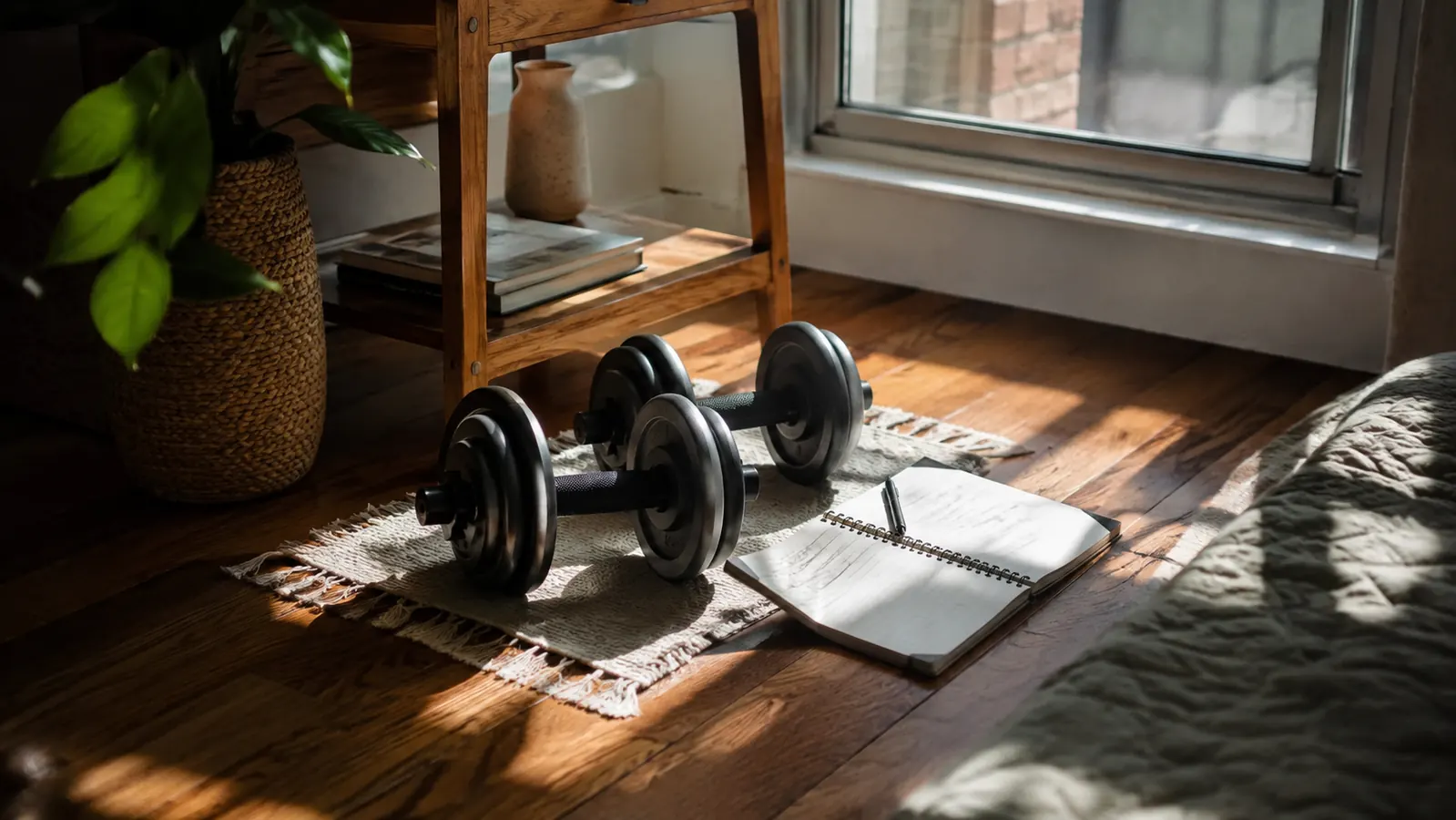
I spent years thinking I needed a gym membership to build real strength. A barbell, a squat rack, enough plates to make my downstairs neighbors nervous. Places like Planet Fitness and the YMCA were options, sure, but between caring for my wife and the online work I do from home, getting to a gym was never going to happen consistently. And I was not about to fill my living room with a rack of fixed dumbbells taking up space we do not have. I tried resistance bands for a while, and they have their place. But bands top out. When you need to feel the weight in your hands to know you are making progress, bands just do not cut it anymore.
That is when I picked up a set of CAP adjustable dumbbells. They live in the corner of our spare room, take up about as much space as a small end table, and they let me go from struggling with 15-pound curls to pressing 45 pounds over my head in about four months. If you want to build real strength at home without turning your house into a gym, here is exactly the plan I follow, every step of the way.
The Dumbbells That Made Home Strength Training Work for Me
The CAP Barbell Adjustable Dumbbell Set gives you the weight range you need to progress from beginner to solid intermediate strength, all in a package that stores in the corner of a bedroom or living room. Multiple weight options up to 50 pounds per hand. Simple screw-lock collars that take ten seconds to change.
Amazon Check Today's Price on Amazon →Step 1: Choose the Right Set of Adjustable Dumbbells for Your Space
The biggest mistake I see people make when they start strength training at home is buying dumbbells that top out too early. They get a set that goes up to 20 pounds, and within two months those weights feel like air. Then they are stuck searching Facebook Marketplace for something heavier or buying a second set. You want adjustable dumbbells that start light enough for shoulder raises and lateral raises and go heavy enough that you cannot curl the last plate. The CAP set covers that range well.
The CAP system comes with multiple weight options, and I chose the version that goes up to 50 pounds per hand. That has been plenty for every exercise I do. Goblet squats at 40 pounds. Overhead press at 35. Rows at 45. By the time 50 pounds feels light on my heaviest lifts, I will be ready for an upgrade. But that is months away, maybe a year. Do not overthink the weight selection. A set that covers 5 to 50 pounds per hand will take you from beginner to solid intermediate without needing a second purchase.
The adjustment mechanism matters more than most people realize. I have tried dial systems that jammed up after a few weeks. I have used spin-lock collars that took forever to thread on and off between sets. The CAP set uses a simple screw-lock collar that takes about ten seconds to swap. It is not the flashiest system on the market, but it is reliable and it has not failed me once in months of daily use. That counts for a lot when you only have 35 minutes for your workout and you do not want to spend five of them fiddling with hardware.
Step 2: Master the Five Foundational Movements
You do not need a dozen exercises to build full-body strength with dumbbells at home. You need five. Here they are in order of importance, with the exact form cues I use for each one.
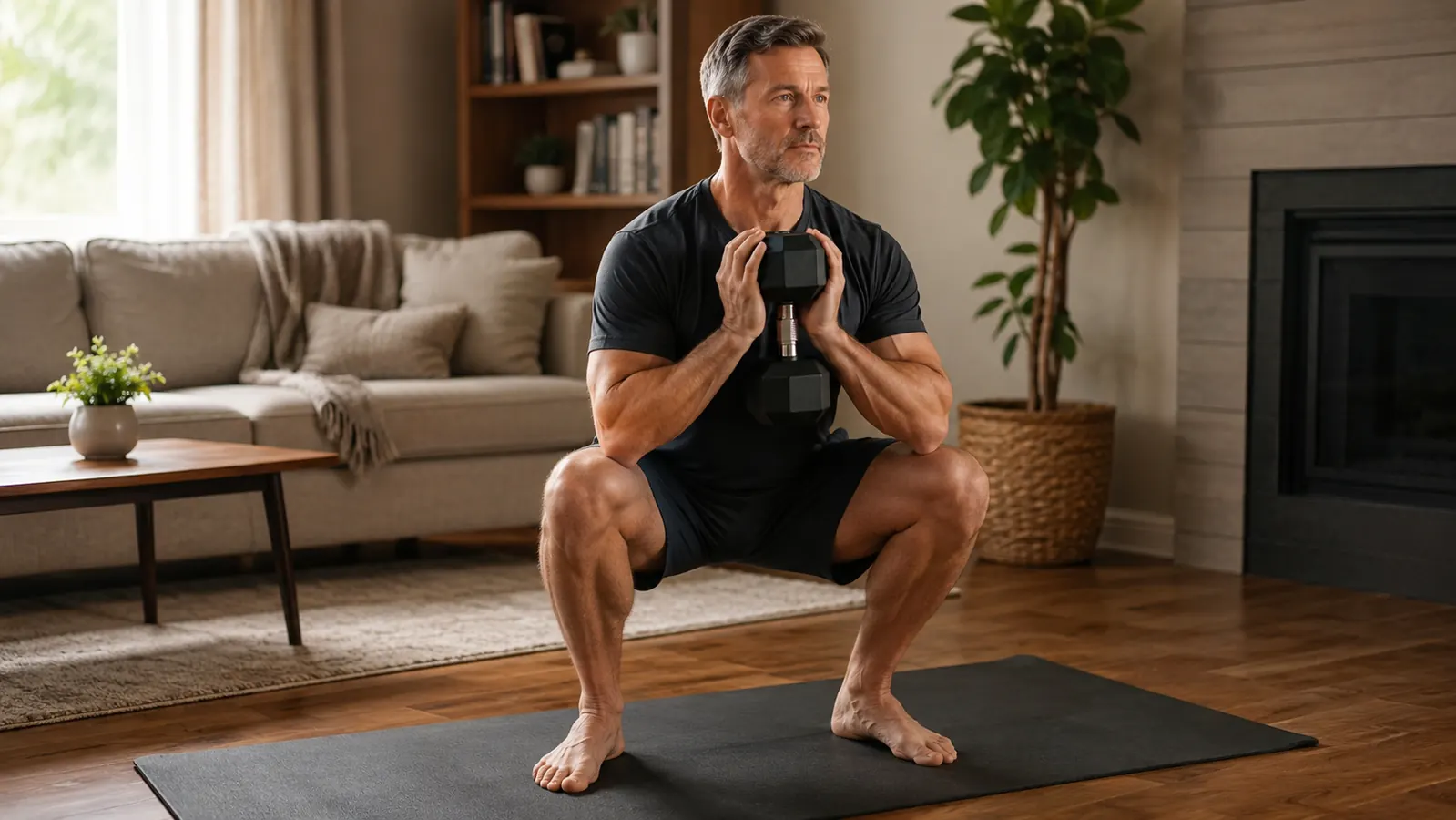
Goblet squats. Hold one dumbbell vertically at your chest with both hands, elbows pointed down, feet shoulder-width apart. Squat down until your hips go below your knees if your mobility allows, or as low as you can go comfortably. This single movement builds leg strength, core stability, and hip mobility all at once. I started with 25 pounds and worked up to 40 over about three months. It is the single best value exercise in home strength training.
Overhead press. Stand up, press both dumbbells from shoulder height to full lockout overhead. Keep your core braced and do not arch your back. This is the safest way to build shoulder strength at home because if you get stuck halfway up, you can just lower the dumbbells back down. No spotter, no safety bars, no risk. I do three sets of eight and add weight when I can hit ten clean reps across all three sets.
Bent-over rows. Hinge at the hips with a flat back, knees slightly bent, and pull both dumbbells toward your lower ribcage. Squeeze your shoulder blades together at the top of each rep. This builds the entire back and improves posture, which matters a lot when you spend hours hunched at a computer for online work. I notice a real difference in how my shoulders feel after a day at the desk when I have kept up with rows consistently.
Floor press. Lie on your back on the floor or a thick exercise mat and press both dumbbells up from your chest. The floor limits your range of motion, which actually protects your shoulders from overextension. I do these on my ProsourceFit mat so my elbows do not hit the hard floor. And for finishing work, bicep curls and overhead triceps extensions. I group these together. Do curls first, then extensions. They are the icing, not the cake, but they build the visible strength that keeps you motivated when progress feels slow.
Step 3: Set Up a Simple Three-Day Weekly Split
I work out three days a week. Monday, Wednesday, Friday. That is it. Not six days, not every single day. Three. Each session takes about 35 minutes including a warm-up of arm circles, bodyweight squats, and a few light warm-up sets with the lightest dumbbell setting.
Here is the exact weekly split I settled on after some trial and error. It has been working consistently for months without burning me out.
Day A on Monday. Goblet squats for three sets of eight reps. Overhead press for three sets of eight. Bent-over rows for three sets of eight. Rest about 90 seconds between sets. That is nine total working sets. Done in about 30 minutes plus a five-minute warm-up. Day B on Wednesday. Same exercises as Day A but swap the order. Lead with rows, then press, then squats. This changes the fatigue pattern so your muscles have to adapt to a different stimulus each week. The weight stays similar, but the order change makes the second half of the workout harder in a productive way.
Day C on Friday. Floor press for three sets of ten. Bicep curls for three sets of ten. Triceps extensions for three sets of ten. This is a lighter, higher-rep day that gives the legs a break and trains the upper body through a different movement pattern. That is the whole plan. Three days, five exercises total, about 35 minutes per session. It works because it is consistent, not because it is fancy. I have missed weeks when caregiving got intense, and I picked right back up where I left off because the routine is so simple to restart. No complicated spreadsheets needed.
Step 4: Apply Progressive Overload Every Single Week
This is the part most home exercisers get wrong. You cannot build strength without making the muscles work harder over time. That is progressive overload, and it is the closest thing to a real secret in strength training. But it is not complicated. You just need to do a little more than you did last week.
Every week, try to do one more rep per set than you did the week before. If you did three sets of eight on goblet squats last Monday, aim for three sets of nine this Monday. When you can comfortably do twelve reps on every set of an exercise, add five pounds. The CAP set makes this easy because the screw-lock collars let you adjust in small, precise increments. I add 2.5 pounds per side on upper body days and 5 pounds on leg days.
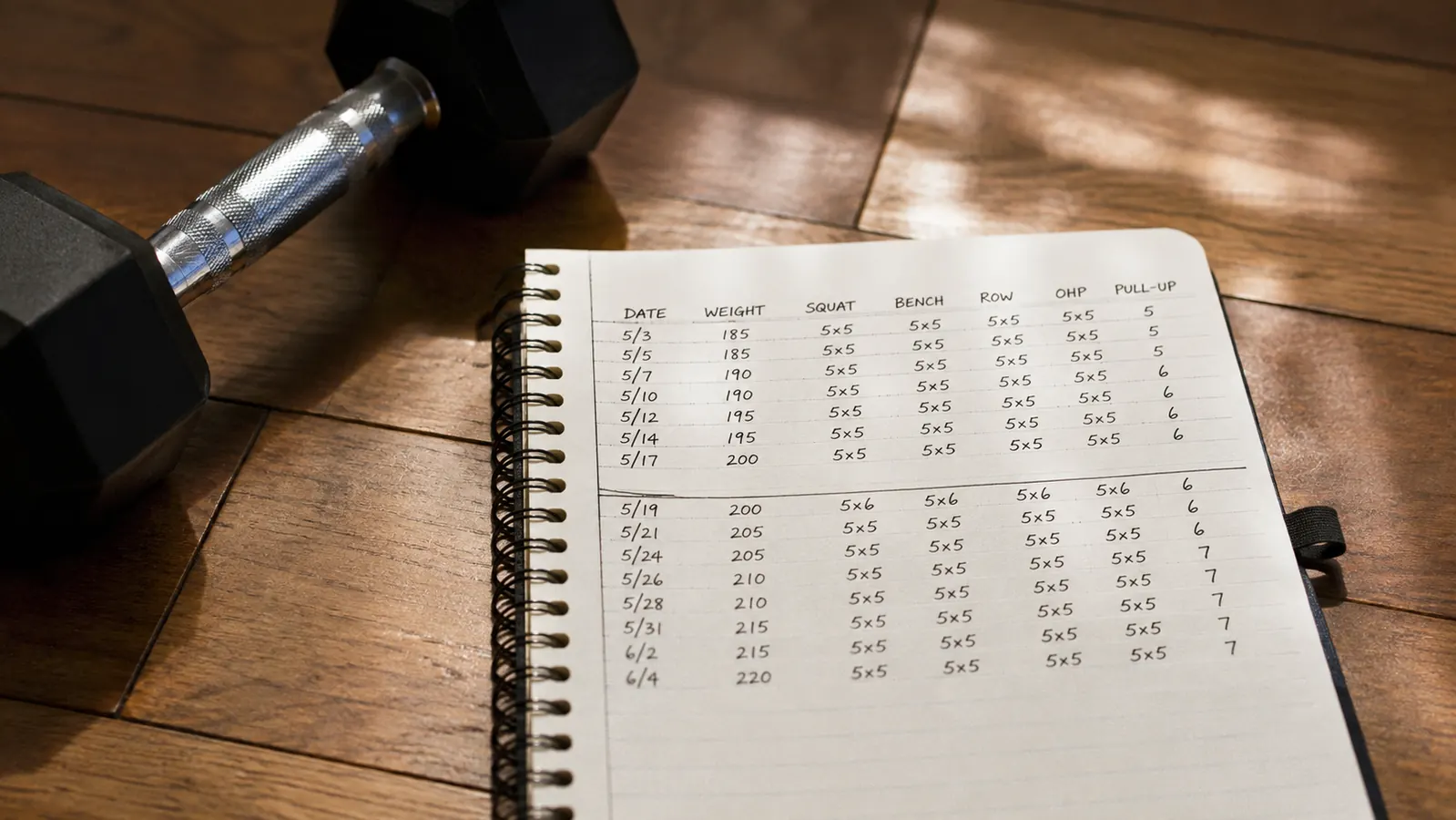
Keep a simple log. I use a small spiral notebook that lives next to the dumbbells on the floor. I write down the date, the weight, and the reps for each exercise before I start my next set. That is all it takes to know whether you are getting stronger. Without a log, you are guessing. And guessing is how you stall for three months without realizing it. Here is what real progress looks like. When I started, my goblet squat was 25 pounds for three sets of eight. Month two, 30 pounds for three sets of ten. Month three, 35 pounds for three sets of eight. Month four, 40 pounds for three sets of eight. That is not dramatic, but it is steady. And steady beats dramatic every time because steady is what keeps you showing up.
Step 5: Listen to Your Body and Adjust as You Go
I have had days where my shoulders feel tight and I drop the weight by ten pounds. I have had weeks where caregiving responsibilities meant I only got one workout in. That is fine. The goal is not a perfect streak of workouts. The goal is to still be doing this six months from now, and a year from now, and five years from now. Perfection is the enemy of consistency, and consistency is the only thing that actually builds strength.
Learn the difference between soreness and pain. Soreness after a workout is normal. It means the muscles are repairing and getting stronger. It usually fades in a day or two. Sharp pain during an exercise means stop, drop the weight, and reassess. I keep a foam roller nearby for recovery on days when my lower back feels tight after squats or my shoulders feel knotty from pressing overhead.
Adjust the plan to fit your life, not the other way around. If Wednesday is not working because that is when you take someone to appointments, move Day B to Tuesday. If you can only manage two workouts one week, that is two more than zero. The people who succeed at home strength training are not the ones with perfect discipline. They are the ones who do not quit when life gets in the way. I remind myself of this every time I miss a workout. One missed day does not undo four months of progress. But quitting altogether does.
What Else Helps
A few things that made a real difference in my home strength routine that I wish someone had told me earlier. First, a thick exercise mat to stand on during squats and overhead presses. Standing directly on a hard floor with dumbbells feels unstable and makes your feet work harder than they need to. The ProsourceFit mat I use gives enough cushion to protect the floor and enough grip to keep my feet planted during standing exercises.
Second, a notebook for tracking weights. I mentioned it already but it bears repeating. A log turns guesswork into data, and data is what lets you know whether you are actually getting stronger or just going through the motions. Third, a consistent time of day. I work out at 10 AM, right after I finish my morning online shift. Having a set time means I never have to decide whether to exercise. The decision is already made. That eliminates the biggest barrier to consistency.
Fourth, patience. This is the hardest thing to buy and the most important thing to have. Real strength takes months to build, not weeks. But if you stick with it, you will look back in six months and realize you are a different person than the one who started. The CAP dumbbells are a tool, not a shortcut. The work is yours to do. But having the right tool makes the work possible in the first place.
I started barely able to curl 15 pounds. Four months later I was pressing 45 pounds overhead. That progress came from three 35-minute sessions a week and a set of CAP adjustable dumbbells in the corner of a spare room.
Start Building Real Strength at Home Today
The CAP Barbell Adjustable Dumbbell Set is the most practical, affordable way to build real strength at home without a gym membership. Multiple weight options, simple adjustment, and compact enough to store in any room.
Amazon Check Today's Price on Amazon →